Capture architectural decisions before they’re forgotten
The decision survives in the code. The reasoning dies in Slack. ContextDx captures decisions as governing intent — traceable to the systems they govern.
No credit card · Founder plan included
// the problem
Why static ADRs die
An ADR is a markdown file in /docs. It’s accurate the day it’s written and ignored by the following Tuesday. The decision shaped the system; the file shaped nothing. Six months on, nobody knows it exists — or why it said what it said.
// the difference
Decisions as living context, not a folder
ADR in /docs
Static. Disconnected from the code. Read once, enforced never, slowly wrong.
Governing intent in ContextDx
Tied to the architecture it governs, with traceability back to the source that justified it. The decision stays next to the system it shaped.
// definition
The ADR-as-governing-intent model
Definition
Governing intent
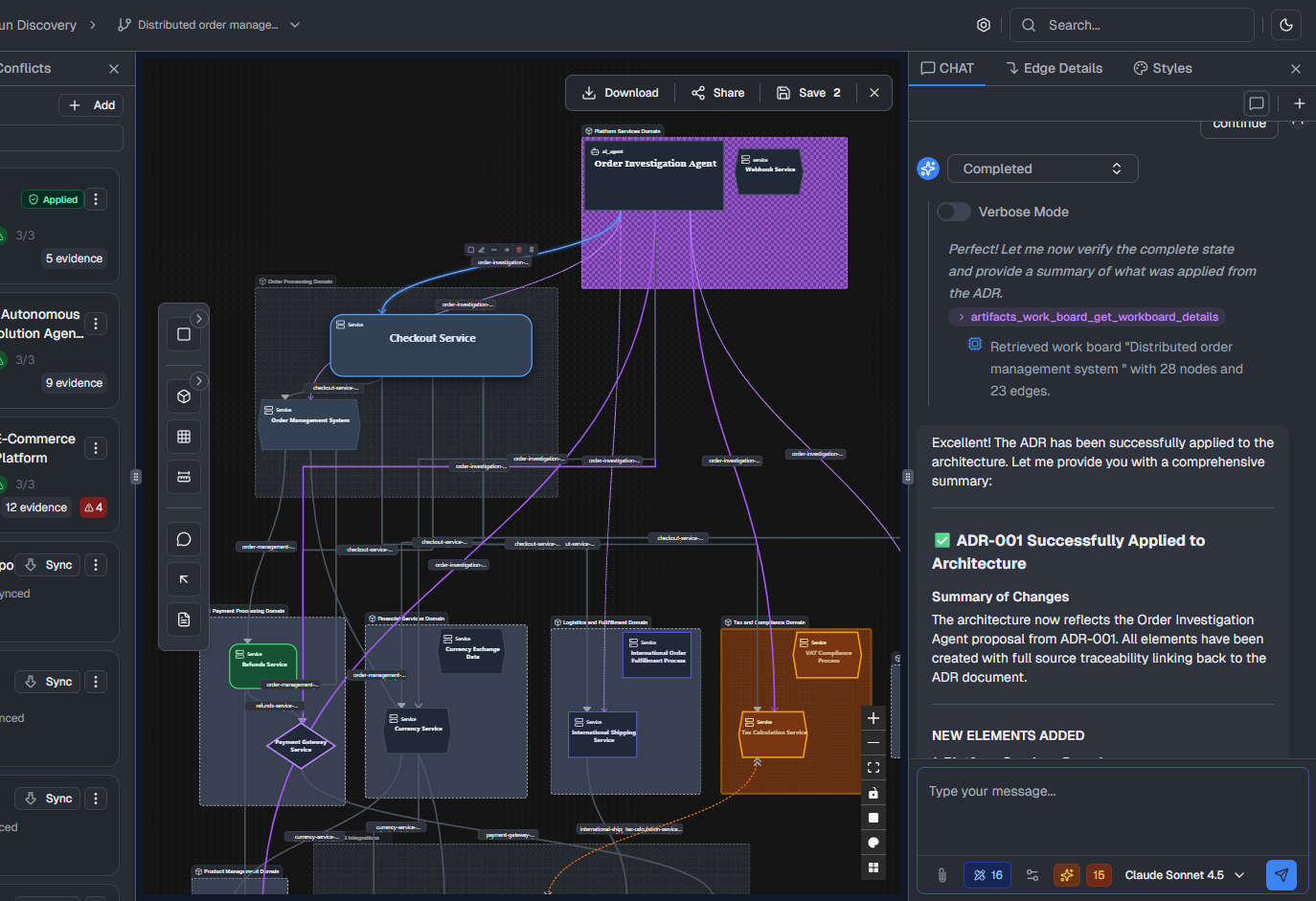
A captured decision that ContextDx applies as a rule the architecture is held to — not a document you hope someone reads. Apply ADR-001 as governing intent, and it travels with the systems it constrains.
- Capture the decision where it’s made, with the reasoning attached.
- Apply it as governing intent over the relevant systems.
- Trace any part of the architecture back to the decision that shaped it.
// keep going
Related ways architects use ContextDx
// governing intent
Keep the decision next to the system it governs.
Capture architectural decisions as living context — traceable, applied, and impossible to lose in a folder.
No credit card · Founder plan included